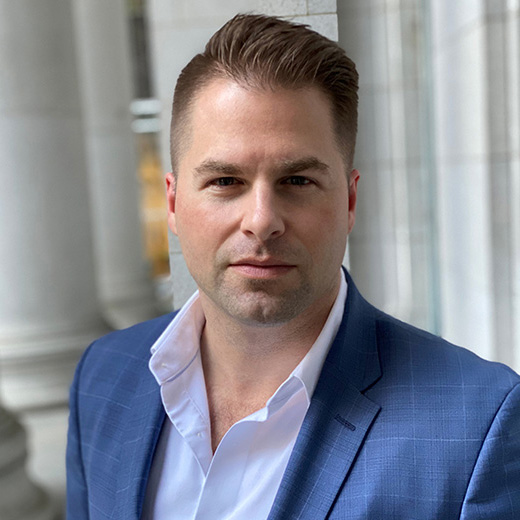
 Brady J. Frey
Dulce et Decorum est
What is war? Cicero knew it to be a dispute through force, one whose justification was an affront to moral goodness. The Oxford English Dictionary defines it as a hostile contention between social organizations. These ontological beginnings are useful for understanding the term, but they mask war's seismic effect and broad-scale implications as natural horror. While war is an affront to humankind, its place as both a universal norm and pervasive influence on the human condition is cemented in surviving evidence throughout human history. Most cultures experienced war, almost all nations are a product of war, and few nations are without an armed force in preparation for war. The ubiquity of war as a running thread in moral philosophy is a linchpin for assessment.
War as Tragic Catalyst
It is beyond the space of this discussion to effectively present the collective tragedy of war, but a brief background is useful to identify landmarks. The 20th century was a time of extreme military conflict, far more violent and bloody than any other time in modern history, beginning with a series of catastrophes–each one more climacteric. The Urkatastrophe of WWI was the culmination of advancing technological, macroeconomic, and political strain that led to WWII as the "greatest man-made catastrophe of all time". The character of warfare had fundamentally changed: mechanization of vehicles, both wheeled and tracked; broad deployment of aerial fighters and bombers; and the adoption of radio to synchronize disparate units of soldiers. The result was destruction and casualty on an unheard-of scale. Over 70 million deaths were counted through conflict, genocide, war crimes, ethnic cleansing, and crimes against humanity. The successive impact of each world war led to collaborative attempts at international cooperation, atonement, justice, and conflict prevention (e.g., the creation of the United Nations, the partition of Germany, containment policy, and the Nuremberg Trials, to name a few), each one struggling to overcome ideological differences but guided by the determination never to repeat this magnitude of brutality. Although the absolute number of war deaths has declined since WWII, a more significant number of ongoing conflicts and large-scale violence have echoed over the decades.
The scale of loss in the first half of the 20th century meant a large majority of the populace was stained by war. A collective grieving shared by communities in concert was exasperated by the hollow moral affirmation of leaders (amongst other rigid declarations of righteousness and rationality) distinctive from the true revelations of the worst of these wars (e.g., trivial disagreements between nations juxtaposed against the ultimate human evil of the Holocaust). Each insult further stunted the collective idea that we were advancing human progress through atrocities directed by men of power claiming expansion of territory, economic gain, and ideologies devaluing human life (e.g., racism and antisemitism through extreme actions such as annihilation policy). While philosophers of the time were not responsible for the horrors of war, their dismissal of normative ethics as cognitively meaningless and metaphysical plucked the moral lessons of the past from contemporary decision-making: emboldening actions once considered forbidden whatever the consequence. While war shuffled the power of world order, its survivors responded to their grief through the reinterpretation of thinking and expression. So, too, was the reassessment of ethics, but with the additional purpose of prescribing moral propositions and moral courses of action.
Of Sanctuary and Choir
Consequentialists (i.e., teleological theories such as egoism and utilitarianism concerned with consequences) subscribe to looking outward from the decision maker when defining the validity of actions. In contrast, nonconseqentialists (i.e., deontological theories such as duty ethics and divine command theory) and virtue ethics look to the individual. Although each framework varies in which normative distinction is the target of judgment (i.e., whether misallocation of evidence predicting a potential outcome, failed duty, or intent of actions), each serves as guide rails for future-orientated decision-making action and past-oriented as a means of evaluating decisions.
Past-orientated assessment goes beyond a social constructionist view of morality or an individual's meaning-making need as a result of grief. In the collective shock of war, mapping a post-mortem moral judgment allows people to magnify an undercurrent of fault. However, the extreme tragedy of the 20th century brought more than a systematic analysis of intended outcomes and actions; it was an existential crisis where collective anxiety, loss, and dread had us question how we broke bad. Ethical non-cognitivism had argued that moral reasoning was meaningless in the advancement of science. However, the reality of war laid bare the need for value theory as a guide that accorded humanity.
Arendt's political philosophy work first veered toward moral questions during her attendance at the trial of Adolf Eichmann. Like others, Arendt struggled with understanding how evil on a global scale could rise in a world that seemed so certain of its moral compass. She wrote that the "problem of evil will be the fundamental question of post-war intellectual life" in light of the Holocaust and its many participants. Her much-maligned banality of evil confronts the thoughtlessness and justification of duty when committing atrocities, but it also proposes judgments that scaffold future ethical frameworks and foresight into ethics. Namely, that the seismic events of WWII would demand a readjustment and review of moral thinking:
"Among the many things which were still thought to be 'permanent and vital' at the beginning of the century and have not lasted, [are] the moral issues… the few rules and standards according to which [people] used to tell right from wrong, and which were invoked to judge or justify others and themselves, and whose validity were supposed to be self-evident to every sane person either as part of divine or of natural law."
Arendt believes that, overnight, ethics forever changed; moral codes once deemed inviolable crumbled as if they were mere habits. She proposed the ethical frameworks of the past devalued principles–codifying immoral behavior and, at times, masking them as permissible. The moral philosophers of the time were struck by belief systems that reduced the defense of the innocent to calculations–a retrograde notion in the face of so much destruction. It was important for Arendt to make sense why so many people supported the murder of so many others; moral philosophy was her path to constructing an understanding of obligation, activity, passivity, and character.
Ethics as Toolkit
When grieving, it is not enough to make sense of past atrocities–survival for the individual and the community in war means solutions to avoid unnecessary death and destruction. With ethical justification under the post-mortem microscope of the second half of the 20th century, ethics was transformed post-tragedy: an aretaic turn in moral theory. Philosophers began moving away from the narrow set of rules or calculated consequences of morality to a conception of human excellence. Importantly, these were new ways of modeling previous thoughts, one that washed away the justification of the atrocities of world wars, touting a greater good.
If the structure of human existence dictates that we must make choices, moral philosophy guides those claims. To get ahead of moral recidivism, there needs to be a means of implementing ethical reflection into deliberate practices. Anscombe famously confronted the problems that plagued utilitarian and deontological approaches that historically dominated normative ethics, and she was not alone in her time (e.g., Rosalind Hursthouse and Philippa Foot, to name a few). This analysis volleyed from focusing on why things happened in relation to duty and intended results (e.g., explaining what or why the act seemed worth doing from the agent's point of view) to the circumstances in which an agent holds moral responsibility for an act.
However, the solutions required moving beyond the esoteric vocation of philosophy to a contemporary method of adapting ethics beyond the early-century dominance of empiricism and positivism. These moral philosophers accepted the criticism of empiricist means of describing the world, but the value of language, above all, was inadequate to prevent the natural horrors of the 20th century. It may be of great moral importance to deliver verdicts and prescriptive rules when faced with the horror of war. However, these rules must be digestible to participants and nonparticipants alike as a deterrent for culpability and intervention. In particular, for practical execution in fields outside academics–a need broadly realized in the aftermath of WWII as human rights, technological, and medical abuse gave way to an ethical theory that confronts the need for values within resolution.
The Next War
The 21st century seems poised to challenge the last century's scale of war. Hamas's invasion and Israel's retaliation in 2023 are the latest large-scale violence in a chain of tragedies. In the past three years, the war in Sudan, Russia's invasion of Ukraine on February 24, 2022, and the second Nagorno-Karabkah war of 2020 have seen mass violence on an emerging global scale. Efforts continue to examine, refine, and systematize ethical toolkits for a better world–most notably the philosophical movement of effective altruism. However, effective altruism suffers the same faults of consequentialism: future-telling and moral corruption. Grievances long identified as justifications for atrocities in 20th-century war.
Cicero believed the answer to war was a turn to moral goodness. I do not disagree–but his statement speaks more to our felt need to dissect past actions through the lens of moral understanding, and our hope to perform preventative surgery against future ills. Moral philosophers re-injecting virtue ethics was the effort to bring moral dialogue back to the table–that some actions, whatever the consequences, may be forbidden. The appeal to virtue measures human life as maximum while guiding decisions away from great evil; at minimum, it prescribes permissible action in ways that oppose the simple measurement of inequality as mere mathematical values. Values that speak beyond empathy to compassion in a manner that advances the human race through the pursuit of human excellence, fulfillment, and happiness. Have these efforts recovered lost humanity in our philosophical search for the truth? Although we have avoided another global war, a continued history of conflicts makes that question dubious. Perhaps our return to virtues has given us a better moral compass and vocabulary to confront evil actions. Or it is possible we did not have these virtues in the first place. Contemporary ethics continues to confront these views–many that are isolated within disciplines, creating morally problematic reactions when they conflict with opposing views. Yet ethics promotes knowledge within collaborative dynamics–including accountability in human history. War is inevitable–so too may be the need to understand and prevent it.