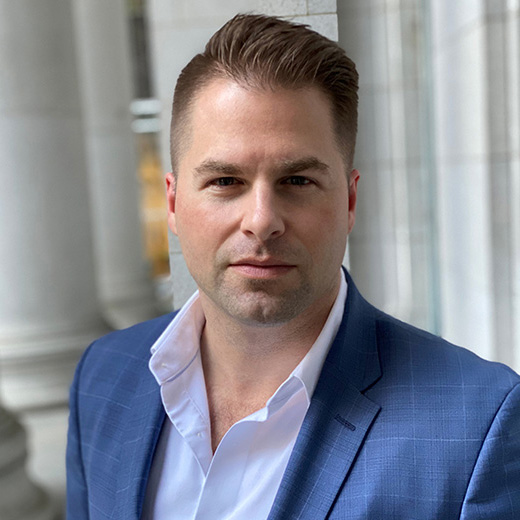
 Brady J. Frey
Birth
After 48 hours of labor, my wife gave birth to our daughter in San Francisco. As I stepped out of the room, a medical official presented a tablet to approve my daughter's birth certificate. Sleep deprived, I was sure I was confused: the menu options for ethnicity rejected my taps with the error "choose one." This is an error I would become accustomed to, as schools in San Francisco, Fremont, and Livermore would present themselves with varying degrees of census data. In eleven years, my daughter has been Chinese, Asian-American, Chinese-American, Mixed-Race, Multiracial, White, Chinese+White, Asian-American+White, Chinese-American+White, and Chinese-American+European+Mixed-Race. Many of which I am not sure I was correct to choose. Each year, the confirmation comes, and for many of those years, it was a discussion with my wife comparing what the school means, what the government means, and, ultimately, what we mean. When she was ten, we sat down and discussed our identities. We reminded her that she was the best of both of us. We asked her what she would choose.
In this paper, I will discuss the intersectionality of Chinese American and White mixed race identity. We will explore the challenges of census classifications as the determinant criterion for identity, for both parents and those finding their way to adulthood, in relation to discriminatory barriers. Finally, I will express opposition to an imposed singular definition, while reflecting on criteria to conceptualize my daughter's horizon of meaning further.
American Racial Identity in Flux
American racial identity waivers with both place and time, as is true for all social constructs, yet it also exhibits aspects of stability among families that align with specific racial identities. Historical classifications dominate the experiences of racial groups in the United States through elements of cultural, social, and legal exclusion; each with their own misrepresentation that are phenomenologically and existentially distinct. Such is the case of Asian American classification, whose history is marked by differential inclusion: measured by a group of people's integral place in economic, cultural, and power dynamics of the United States, but only (or precisely) in relation to their subordinate standing to whiteness.
"Asian American" is a misnomer, invoking assumptions of cultural unification across over 20MM Americans, exceeding 21 diverse groups, under an ambiguous categorical framework. Much like other U.S. Census classifications, creating Asian American conditions centered around ambiguity as a critical classification component. Gone are the definitive characteristics of birthplace, language, or surname, and in its place is the diffusion of a title as an institutionalized notion of panethnicity. To be Asian American is to be anyone with a shared origin of 4.5B people, from over 50 countries, residing within the United States:
"A person having origins in any of the original peoples of the Far East, Southeast Asia, or the Indian subcontinent including, for example, Cambodia, China, India, Japan, Korea, Malaysia, Pakistan, the Philippine Islands, Thailand, and Vietnam."
This generalization serves duplicity: to reduce friction with the idea of panethnicity while framing unification as complementary to national identity in White America. But for those generations who immigrated from Asia, or were born to Asian immigrants, compulsory identification is gilded in a communal confusion Ronald Takaki once defined as the fog of "strangers from a different shore." It is fair to ask if there can even be one "Asian American" within the great diversity of this term, much less a distinctive historical narrative that roots generational history as a place for racial identity. One that fluctuations within the geopolitical dynamics of American life, as seen in Chinese American subgroups:
"When Sino—American relations are excellent, the Chinese Americans benefit as goodwill ambassadors and role models, serving as cultural and economic bridges between the two countries; but when Sino-American relations deteriorate, the Chinese Americans have been vilified as enemies, traitors, and spies—not just in the United States, but in mainland China. To describe the vulnerability of his people, one Chinese American aptly called them 'an egg between two big plates.'"
In its most common form, the Asian American Model Minority concept is the dominant attaché to how Americans view Asian Americans today. Asian Americans are seen as hard-working, law-abiding, and polite, with the potential for greater success in education, family, and career exceeding the norm of other racial groups. Underlying such praise is a false narrative that masks the institutional discrimination for Asian American subgroups, erases the distinction between individuals, ignores the diversity of Asian groups, and perpetuates the distinction that even American-born Asians are forever foreigners. By framing Asian Americans at the top of a minority lottery in America, the myth of the end of racism materializes, rebuffing the betterment of racial justice.
Is my daughter this? Both similarities and distinctions exist between Asian American and Chinese-American groups. So, too is whiteness. My wife is Chinese American and I am White. Some aspects of raising our daughter's awareness of race were structured to counteract the naiveté and conformity that come early in White understanding of privilege and advantage in U.S. society. White American dominance exudes a blunting of race awareness from an early age–a background character to perceptions of the universality of norms and values, while contradictorily projecting a superiority of White cultural groups. Whiteness has a destabilizing effect on mixed race families, where passing or conforming to the norms of racial identity is not so transparent:
"Multiracial people with White ancestry may experience aspects of White culture, norms, and values during their socialization and continued interaction with White family members. The influence of White racial ancestry is not separated out, as in considering the effect of 'one's White side,' but interacts with other factors to influence an individual's choice of racial identity."
What to choose when one race in the equation imposes historical oppression on another, in the same body? At times my daughter's skin color and features render her race almost unknowable–allowing her to easily transition through White, Chinese American, or mixed race spaces. A mixed race person with White ancestry: experiencing aspects of cultural norms and values of White privilege concurrently with the elements of socially marginalized racial groups. Each location is awkwardly occupied, entangled in a tension that is both social and physical. Frantz Fanon's notion of epidermal schemas and corporeal schemas opens a way of seeing this more clearly; a body understood through both its location yet not always reducible to social relations. Instead, both moments are in play: caught between the powerful pull of two racialized and racist schemas. Perhaps not as a terminal point, but as a moment that is never just one location, one identity, or, simply, one "thing."
One study characterized the dissonance between multiracial individuals as reduced in the case of White and Asian American identities. The reduction may be seen as a desire to minimize differences: assimilation through reduced bidirectional racial socialization compared with other minority groups in America. Such cultural exposure, and physical appearance, may influence how a person identifies, but acceptance within family and social groups looms large, too. There exists a perception amongst in-group standards of acceptance that accompany discrimination and self-reflected appraisal. Particularly awareness of "traditional" cultural knowledge and "authentic" family practice serving as a metric for racial purity. Between the passing as White, and the purity of Chinese ancestry as a means of in-group acceptance, fluidity in racial identity can bring us back to surprisingly pedestrian solutions:
"Racial identification of these children by their parents can be somewhat arbitrary; for instance, when forced to choose a single-race category on a registration form, parents may flip a coin or rotate racial categories over time. The arbitrary and fluid nature of parental racial identification of Asian-White children demonstrates that these multiracial individuals are not limited to one racial identity."
Her answer (i.e., self-declared racial identity) carries metaphysical and ontological questions on whether race exists. For my daughter, race is ubiquitous–but her decision to embrace a (both, all, some) racial identity will complicate choices related to aspects of everyday life. People have embraced the concept of race to justify specific actions, many of which she will confront due to social perception of hereditable physical traits I or her mother have passed on. Even if biological race is not real, many people still assume so; an acceptance that confronts full-throated claims related to the social and moral freedoms of racial groups. Structural racism and aggregated data may perpetuate misdiagnosis in health risks depending on which race she chooses on her medical record.
Further, recognizing intersectionality across multiple marginalized identities may mean the difference between the quality of treatment, medical decisions, and diagnostics she receives. Will the medical practitioner in my daughter's next appointment believe resistance to taking certain medication is a result of her Chinese heritage, built around deference and stoicism? She may be unaware that a choice may also be imposed on her through the historical practice of hypodescent assignment (i.e., classified according to the parent of color). Collectively, will this sense of shared experience by a particular racial group influence her decision to embrace or change her racial identity throughout her life? I can imagine it would.
At first blush, this ability to embody an existential removal of identity associated with the historical narrative of racial experiences would seem powerful. Openness and liberation that transcends oppression in a new world. That fluidity allows many mixed race children to shift their identity into adulthood, with over a 2/3rds reporting a transition to a differing single race or multiracial in identity. Still, the lingering forces of identity draw each of us as we become aware of the surface of our bodies: both in parallel and antagonistic with the world at large. Thrown into the world, my daughter's decision faced an answer that confronts a lack of racial solidarity by an unconstructed racial group that seems to wonder about its purpose, place, and past. In a country where a person is expected to be in only one category, being a social anomaly can exasperate a sense of belonging and serve as an unsolicited reminder that race is somehow tangible.
Intersectional & Mixed Race
Much has been done to explore the salience of mixed race identity. To some, the expectations within competing racial identities lead to a challenging sense of isolation and self-blame–oftentimes as a target of structural oppression. Cultural homelessness speaks to this idea: the visible, physical, features of mixed race children who may find themselves ostracized from any number of racial groups, decreasing the chance of finding an effortless acceptance:
"Like our [existing] racial classification system, [each] characterized by dichotomous or bipolar classification schemes and such can only marginalize the status of racially or ethnically mixed persons."
To be a bit of some is a complex additive identity for individuals who inhabit multiple factors of privilege or marginality. Yet, home does not need to be dominant, regimented, or a broad and complete arrangement of identity; it may also be parts formed in ways that find their ways to tightly interlock or embrace loosely. It can be an incomplete plurality, where my daughter travels across boundaries at will, or, at times, being in two planes within the same moment. A traveler between worlds, by choice or necessity, to experience elements of the self while discovering the presence of others.
Still, there is the problem of understanding, expressing, and naming an experience as a means of shared social interpretation. She can choose to characterize her identity as mixed or multiracial as a way of providing room to travel across bordering identities. But such a term is as variable as it is broad: lumping an immense variety of people in ways that describe everyone and simultaneously no one. Multiracial adults differ in their view of alignment, with some cultures aligning more closely to minority representation, and others more prominently to whiteness. These distinctions may not change the perception of the other:
"Mixed-race adults with an Asian background are about as likely to report being discriminated against as are single-race Asians, while multiracial adults with a white background are more likely than single-race whites to say they have experienced racial discrimination."
She may also choose to hyphenate key origins of her heritage (e.g., Asian-White, Chinese-White, etc.), which anchors a malleable, historical heritage subject to complex American racial identity. Both come with caveats: where mixed identity is "metaphysically and phenomenologically thin," hyphenation preserves a rigid conception of race (and all its baggage). My wife has told me she feels too Chinese to be American, and yet too American to be Chinese. My daughter's conception of whiteness introduces a third body to the problem–producing a chaotic orbit whose predictable motion between White, Chinese, and American is elusive. Hyphenation is a solution to bureaucracy and limited space on forms, not people.
Her Stand
Is there space for mixed race? There needs to be. It exists to my daughter–more apparent in certain aspects of her life. It seems multiracial identity may be rooted in framing identity both at an individual level and at a broader, panoramic view for a multitude of people. A perspective that allows her to simultaneously embrace some semblance of marginality and privilege relevant to whatever complex moment she faces. All of which is ever-changing as she ages alongside political and social systemic shifts. Recognizing mixed race gives her agency, and in a broader sense, encourages justice by confronting the wrinkles in social inequity.
She's not alone. Multiple races are the most prominent growth group, with the most reported race identification in the past 40 years of US Census reporting. For individuals with this question, framing racial identity as a choice can be empowering in a way that encourages (and embraces) self-definition. Yet when the intersectional identities of certain groups collide, in particular the dominance of whiteness, there can be polarizing tension that may further the same oppression and privilege minority representation hopes to defeat. How do I embrace diverse differences in a single bucket while helping her make sense of her individualized experiences? How does a single-race parent help their child investigate their experiences while recognizing their ancestry differs in material (and disparate) ways? Most certainly for parents whose whiteness promotes racial dominance with a side of underdeveloped racial awareness.
Maybe the fault is mine for hunting for a single answer on a subject that deserves more depth than I am equipped to provide. In that moment, I wanted to help her make sense of this choice, the gravity of this decision. But to give my daughter guidance would be unnecessarily restrictive–trapped in my doubt if I should be defining the conceptions instead of the concept. Yet it feels unseemly to propose a prescriptive order of necessary and sufficient conditions for an identity that is not mine:
"We should expect that mixed-race identities do and will continue to vary depending on whether it was parents, grandparents, or great-grandparents who were members of the different races in a person's mixed-race ancestry. And I think we should continue to be open to the fact that many mixed-race individuals do and will continue to change their preferred racial identities, depending on personal and public context, life phase, and other factors."
So that day, I was silent. I did not have to wait long. She spoke without much delay:
"I don't know. I feel Chinese or White. Just put whatever, I can change it next year."
All I could say was, ok. That's cool. You have the right to be whatever you want. She didn't hear me, though–she'd already run upstairs to call a friend.