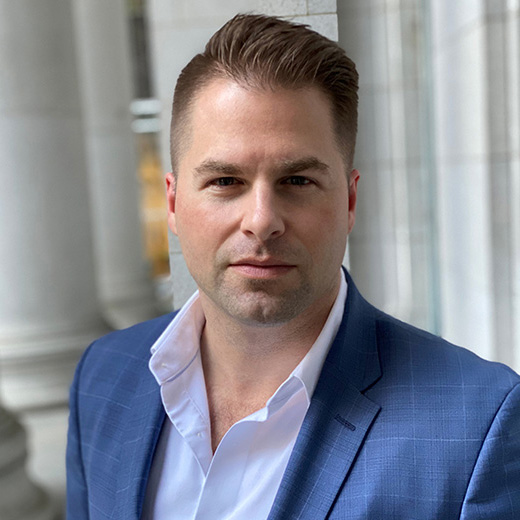
 Brady J. Frey
Corporate Ideals
It is a well-worn mantra that diversity and inclusion provide positive growth across organizational metrics. The mantra is correct: increased revenue, more significant market share, more substantial profits, and more customers are all benefits that derive diverse viewpoints in collaborative environments. They also introduce positive conflict; leading to the contestation of varied perspectives through creative and superior problem-solving. Moreover, at a foundational level they contribute to a greater sense of happiness for people interacting across hierarchy. These dynamics are valuable to career success, entity growth, and the worldly need we call "income." Capitalist gains aside, diversity can also lead to intercultural understanding that opens people to the lived experiences of alterity and the totality of life. Diversity allows us to "move beyond one's inherited trappings, preexisting categories, automatic responses to situations, and the personal perspective" inherit in an insular cultural reality. To understand different cultures, we ground ourselves in historical heritage, contextual relationships, and dialectical interaction. More directly, diversity in our environment allows us to form a dialogical interaction and develop multilayered relationships with ourselves and others.
The corporate method of curating cross-cultural interaction has leaned large into the scientific method, but it struggles to convey the process that intertwines interpretation, understanding, and intercultural progression. That traditional approach is atomistic, and assumes a totality of intercultural fluidity can be achieved through the recognition of assorted, discreet cultures. Above all, the desire to register, or record, a moment in a person's cultural perspective fails to adequately define the perspective in what we see and how we cope with contrary perspectives. Our innate interdependency, or that we have a natural need to be with people, speaks to the need for a contextual recognition of differences. This awareness of nonconformity should be equal parts championed by leaders and differences must be bridged practitioners to promote something greater than a simple sum. Philosophical hermeneutics offers a solution, where being may be understood through the contours of translatable communication and across a spectrum of interaction within the context of our lives. Transitions through an intercultural mindset begin with the identification of the self, and transition through the dynamic of a self-other relationship. Through Gadamer's philosophical hermeneutics, I will demonstrate a model for succession across intercultural awareness. Using the hermeneutic circle, we will define a method of intercultural interpretation that ceaselessly moves between individual cultures and clustered cultural groups. As a product of our interpretive experience, we will inform a new understanding of ourselves and others, while discerning the meaning of both.
The breadth of a definitive outline of culture is beyond the scope of this work. On a rudimentary level, culture includes the beliefs, symbols, languages, values, and artifacts apart of a society. Systems such as Intercultural Development Inventory (IDI) and Developmental Model of Intercultural Sensitivity (DMIS) include protected classes within their spectrum: notably "'other culture' groups, including nationality, ethnicity, gender, and other diversity categories." The result is that both continuums include social constructs such as race alongside shared identities associated with ethnicity. This outcome makes sense on one front: race and ethnicity are historically intertwined, primarily related to research. Nevertheless, it muddies the water to focus on culture as an all-encompassing topic to posit a simplified solution. Gadamer's philosophical hermeneutics can "help untangle the mass of confusion" that arises from questions on human identity, group membership, and how to translate disparate perspectives.
Notably, the terms cross-culture and intercultural also carry nuances. In this essay, cross-culture compares cultures against an established norm or dominant culture, whereas intercultural describes disparate cultural communication that remodels the self, the other, and the whole. Regarding cross-culture, we will utilize these distinctions to reference the positions of dominant or insular perspectives where atomistic structures are sampled but used without cohesion. In contrast, intercultural will be used when individuals or group coil freely within one's own culture or the culture of others.
Intercultural Assessments
Hammer's Intercultural Development Inventory (IDI) is an assessment tool utilizing administered surveys to measure individual and group intercultural competency. Established in 1998 and modified over twenty years, 50 questions are given and assessed to capture an individual, group, or organization's cultural sensitivity. IDI is the benchmark in cross-cultural assessment tools for organizations. It is used in 30 countries, in every branch of the United States Military, in a majority of fortune 500 businesses, and (due to the recommendation of the American Council of Education (ACE)) is a standard across non-profits and prominent educational institutions. Additionally, IDI has been translated across 17 different languages with a focus on ensuring "linguistic and conceptual equivalence" in relation to terminology and survey assessment. IDI has strong results in qualitative analysis for effective reinforcement of cultural learning, particularly across language instruction. IDI's foundation is based on Bennett's 1986 Developmental Model of Intercultural Sensitivity (DMIS), which theorized that the perception of cultural difference could be measured and predicted by assessment. Results may be assessed across a continuum, allowing curated learning programs to improve cross-cultural sensitivity:
"The DMIS continuum extends from ethnocentrism, the experience of one's own culture as 'central to reality,' to ethnorelativism, the experience of one's own and other cultures as 'relative to context.' Developmental movement is one-way, permanent, and applicable to anything defined as cultural difference, although there may be 'retreats' from some positions."
Movement across the DMIS continuum only becomes realized by choice; as someone shifts outside their central-to-reality (or primary social construct) experience, more complex social structures are needed to navigate cultural differences. Each individual's placement is uniquely scaled, as is their awareness across cultural dynamics, under the measurement of DMIS.
Both IDI and DMIS share similarities regarding their continuum. For academic clarity, we will model DSIM's grounding scale, with a spectrum divided between ethnocentric, or the association of one's own experience as reality, and ethnorelative, or the understanding of other cultures as a way of defining one's own reality. Bennet defines DMIS's theoretical framework in nomenclature that would find a comfortable home among hermeneutical phenomenology:
"…the DMIS assumes that we are constructing boundaries of 'self' and 'other' in ways that guide our experience of intercultural events. The most ethnocentric construction, Denial, is one wherein only vague categories of 'other' are available for perceiving people from different cultural contexts. At the other end of the continuum, the most ethnorelative construction of Integration supposes that complex self/other categories are incorporated into one's personal identity and into decision-making regarding ethicality in multicultural relations."
Within the ethnocentric side, we find three divisions in order of broadening awareness:
- Denial, or the default condition that fails to see or value cultural differences. Alternative perspectives are ignored or dismissed with hostility. Additionally, the denial perspective may introduce an exaggerated complexity of the person's member group while denoting simplicity for all other groups. Transitioning to the next phase means preliminary recognition of others as complex.
- Defense, or the perception of other groups within a highly stereotyped purview. Persons may display a highly polarized viewpoint of superiority where either 'us' or 'them' may be criticized as inferior or overly exoticized as superior–the dichotomy results in the exaggeration of everything from nationalism to the reduction of people through narrow cultural stereotypes. Transition to the next phase is achieved by recognizing shared values across disparate cultural perspectives.
- Minimization, or the sterilization and reduction of cross-cultural differences. Perspectives of cultural universality are subscribed, reducing significant differences, and enabling privileges of the dominant culture. Minimization is a fragile perspective, and when confronted with a misstep of behavior alongside the best intentions, a person may revert to defensive behavior. Through the conversation of diverse issues with others, tangible recognition moves people to the next step.
As a person transitions towards greater recognition of others, they shift to the ethnorelative side with three further divisions:
- Acceptance, or the recognition of cultural differences for the other. Curiosity of other perspectives blossoms but is still narrowly tailored. The person must face ethics within the context of another culture without justifying behavior as dissimilar. Acceptance confronts prejudice as both complex and necessary; it reconciles cultural relativity with moral conflict to help the person develop further. Moving away from a binary or multiplicitous cultural justification allows contextual relativism to take shape and move on to the next phase.
- Adaptation, or empathetic engagement with other cultures. Here the person exhibits authentic behavior in alternative cultural environments. In short, they shift within the context of a new environment–adapting fluidly. Although authenticity is crucial to adaptation, a chameleon may develop that does not effectively define their identity. The solution to further transition is expanding the identity of the individual (i.e., recognizing rigidity is unnecessary as a placeholder for being) into something more dynamic.
- Integration, or the completion of authentic identity and continued cross-integration of cultural differences and distinction. Here the self reaches heightened recognition and contains the ability to shift in and out of cultural worldviews. This stage is where DMIS deviates from IDI (or vice versa): IDI views this stage as a characteristic of all levels of identity rather than a scaled achievement.
A private set of questions are proctored to a participant to assess a person's placement on either the IDI or DMIS continuum. The results are tabulated, and a debrief is established with a qualified administrator (QA). Tests and their associated product are proprietary and protected by copyright: they may not be shared outside directly associated participants. Academic usage is forbidden without first attending the qualified administrator seminar, agreeing to share your dissertation for commercial purposes, and adhering to adhering to the IDI's definition of best practices as defined under their licensing. In larger units individual scores are modeled against group variables to compare the measurement of individuals people as unconnected fragments against a factored group score. During the debrief, a person will write down ideas to pre-formed statements in an Intercultural Development Plan; these include a series of questions that attempt to reflect on self-sense of culture, experience with diversity, and establish goals to more effectively explore cultural differences. During a follow-up group debrief, the exploration is similar but structured around the reflection of group related interaction (i.e., intercultural connectivity).
At this point, the process takes a turn: with a cultural position charted, how do you broaden your perspective of other worldviews? The will to improve is paramount to growth, but intercultural plans often lean on rudimentary explorations such as searching the internet for "cultural patterns," talking to coworkers about differences in culture, and group sharing lessons learned about cultures. The result of this evaluation is a bathetic course of action that leans heavily into corporate ideology. To leaders of industry and finance, this makes sense: businesses are targeting rapid, cost-effective education with expedient results. However, from the perspective of rational egoism this will return only marginal results: after all, it is presumptuous to course-correct a central concept of humankind through a process that requires contextual self-awareness. This is especially true if the target of analysis lacks foundational perspective of the self.
To promote intercultural growth on both an individual and a group level requires the acknowledgement that this is a transformative topic with profoundly rooted aversion, and that it faces systemic opposition. The spark towards a new perspective of reality, coupled with the behavioral change towards Bennett's one-way, permanent movement, is a profound, herculean task. Scientific assessment alone may not provide ways for us to connect distinct ways of life within the totality of world experiences. A focus on divisions alone may neglect exploring the ways in which those prejudices help us identify and "exercise a problematic influence on" collaborative understanding. Prejudicial comprehension allows us to absorb dialogue that encircles self-understanding; this allows us to face issues of otherness while understanding the implications of history. This leads to understanding through dialogue, or more importantly, the value of uninterrupted listening. Philosophical hermeneutics provides an avenue for both practical application and theory, rooted in an iteration of understanding.
Philosophical Hermeneutics
In 1960, Hans-Georg Gadamer published Truth and Method. After being translated from German to English in 1975, Gadamer's seminal work received extensive but rather glacial recognition in the English-speaking world until an improved translation in 1989 addressed errors and omissions. Truth and Method is a consummation of Gadamer's career in both lecture and seminar, guiding his students through his expertise in classical philosophy and philology. Truth and method was ground-breaking: stepping away (but never quite completely) from the shadow of Heidegger through a literary style that was equal parts approachable and digestible. This method allowed Gadamer to advance the concept of philosophical hermeneutics in novel terms.
Truth and Method targets Heidegger's anticipatory structure of understanding through the use of language and the interweaving of relationships. A central point that history "does not belong to us; we belong to it" represents Gadamer's humble approach to self-understanding. Humans are born into presence, with conditioning defined by the existing world even before establishing the language necessary to determine its dynamic:
"Long before we understand ourselves through the process of self-examination, we understand ourselves in a self-evident way in the family, society, and state in which we live. The focus of subjectivity is a distorting mirror. The self-awareness of the individual is only a flickering in the closed circuits of historical life."
Gadamer then moves away from the idea of the past as a yoke of tradition and into a foundational ingredient in how we understand the world around us:
"That is why the prejudices of the individual, far more than his judgments, constitute the historical reality of his being."
Prejudices provide context to how we try to understand being, including our position in reality. In Gadamerian terms, these are a positive conception of prejudice, in the sense of pre-judgment that allows us to understand others as well as a self-referential understanding of our perspectives. For Gadamer, to exist (or to be real) is collectively defined through the interactions of self and other. Existence is to be understood at the present. Collectively through our sociohistoric vantage, we engage in dialogue to align viewpoints, or through a fusion of horizons:
"Every finite present has its limitations. We define the concept of 'situation' by saying that it represents a standpoint that limits the possibility of vision. Hence essential to the concept of situation is the concept of 'horizon.' The horizon is the range of vision that includes everything that can be seen from a particular vantage point. Applying this to the thinking mind, we speak of narrowness of horizon, of the possible expansion of horizon, of the opening up of new horizons, and so forth."
Using these principles, we can arrive at an expanded understanding termed the Hermeneutic Circle: using our preconceived ideas as a foundation of our understanding, we examine parts of our exploratory subject matter and arrive at a more substantive conception of the topic. Through circular dialogue, grounded by assumptions and informed by tradition, new prejudices are defined and old prejudices are dismissed. We develop an evolving contextual meaning and mutual approximation of truth at this moment. This process is iterative and infinite, resulting in a greater understanding of ourselves and the other.
Intercultural Hermeneutics
Human self-understanding is hermeneutical, and in applied philosophy, Gadamer's philosophical hermeneutics proves useful when interpreting living beings in the world. Gadamer understood this fundamentally in his later years:
"To live with the other, as the other of the other—this basic human task applies to the micro- as well as to the macro-level. Just as each of us learn to live with the other in the process of individual maturation, a similar learning process holds true for larger communities, for nations and for states…. And here it may be one of the special advantages of Europe that—more than elsewhere—her inhabitants have been able or were compelled to learn how to live with others [after two devastating World Wars], even if the others are very different."
Embracing the particulars of another's culture, placing them into context, and defining relevance to meaning is a necessary foundation when building intercultural relationships. At the center, these connections are dialogical; interpretation-driven discussions informed by active listening. Notably, this engagement does not reduce the historical experience of the self and the other; it marks a shift from epistemological to ontological in a transformative understanding of one another's existence. In particular, the ability to listen is profound when faced with non-dominate, cross-culture interactions. Listening without rehearsing displays authenticity that entrenches learning; these are elements both attentive and careful that define hermeneutics. For it is always "the possibility that the other person may be right [which] is the soul of hermeneutics." As participants in intercultural communication, the constructs that define heritage and perspective are always already understood through a specific vantage point. There is no objective reality, only dialogue to bridge views:
"[W]e have to engage each other in dialogue, with the understanding that the only truth or correct understanding that can be had of the subject matter is one that is a function of the points at which our various interpretations or accounts intersect."
Programs that establish curated dialogue between cross-cultural groups (structured with preliminary training on items such as country specific history, language translation, individual assessment, and centrally defined goals), through a curated hermeneutic circle, is a path to greater understanding and development across the intercultural continuum. Programs, specifically, that are conscious of the placement of tact within the hermeneutic circle and its situational preservation of distance. The structure is open-ended, with the inevitable goal loosely defined:
"…participants in cross-cultural encounter are expected neither to erase themselves (in a vain attempt to 'go native') nor to appropriate and subjugate the other's difference; rather, the point is to achieve a shared appreciation and recognition of differences (what Heidegger used to call 'letting-be')."
Nevertheless, this praxis of engagement introduces unique challenges, especially when there is a significant gap in horizons as a product of shared hermeneutical resources. Anderson identifies a series of hermeneutical impasses as increasingly problematic roadblocks:
- Lack of common language that necessitates a language translator.
- Gap in the application of common language due to 'missing knowledge of certain lexical items,' that may necessitate a medium focused on intercultural variations.
- Inability to understand the complexity of language, which may indicate a lack of "cultural familiarity." Importantly, translation of lexicon and language is now not a problem, and a medium may serve as a cross-cultural translator.
- Attribution of mischaracterized interpretation due to significantly polarized prejudice.
It is roadblock four that provides the most difficulty, where a "particular bias that causes the interpreter to privilege uncharitable interpretations over more charitable ones" (e.g., foreignness, disbelief, deliberate obfuscation, or outright refusal). This taints self-understanding by resisting the ability to engage in interpretation. The position of power within the group dynamic is also important, as are the representatives of associated cultures and their position of power and the role of power central to the discussion on whole (whether systemic or individual). In particular, the willful inability to engage in the hermeneutic circle contrasts with an open-minded conversationalist who may not yet comprehend the topic despite good faith efforts. Type four behavior is "unresolvable in principle," or at minimum, beyond the scope of hermeneutics–the will to engage in discussion is necessary.
Finally, there is the looming concern that while Gadamer would embrace diverse traditions later in life, works such as Truth and Method does not explicitly address interaction with non-Western intercultural communication. Due to the focus on Indo-European language as established in a Eurocentric culture, the ideas of 'tradition' and 'horizon' are individualistic in a manner that seems more intracultural than intercultural. Other concerns are practical, where philosopher Cheng Chung-Ying 成中英 has attempted to adapt a translation of substance and being through classical Chinese heritage in his named onto-hermeneutic principle. One byproduct (amongst many) is that colonization leads to a suspicion that Western-centric frameworks deliver Western methods of thinking by imposing Western products of knowledge. A system that may allow momentary shifts, but not genuine change, under the adage "the master's tools will never dismantle the master's house." Concerns surrounding Western creep are a rational, inescapable product of colonialism. Such distortions impact the identity of the self:
"Imperialism and colonialism both have the power to deceive one into thinking that one's discoveries may be one's own, when, in fact, they are already contained in the borrowed methods and ideologies that color our perceptions and inform our pre-theoretical thoughts."
The hope is continued modernization that adapts hermeneutics to embrace the stories of other cultures (both rich in character and long with tragedy) outside the intent of measurable data. The end goal is to make hermeneutics beyond Gadamer, owned by multicultural beliefs with less dependency on translation.
Concluding Remarks
Organizations champion diversity and inclusion as a value-driven exercise to justifiably improving the lives of others and increase capital. However, the atomistic driver dissecting intercultural and cross-cultural dynamics leads to measurable but sterile data, and toneless inaction. Additionally, the drivers to change oppressive systems undo well-worn issues but do not change minds. There is inherent value in understanding one's place within the world, the world of others, and achieving mutual perspective of both. Philosophical hermeneutics serves as a roadmap to recognizing the culture of the self, iterative understanding of another's cultures, balancing them into context, and refining meaning. For the willful (and the curious) intercultural understanding, and cultural self-understanding, are an unfinished project that enriches in remarkable ways.
Gadamer's later works were expansive, and captured the need for hermeneutics in a modern world. His philosophical hermeneutics promoted the idea that intercultural engagement is not for uniformity or consensus (what we would term today as colorblindness or color-evasiveness), but to encourage progressive learning across transformative dialogue and a rich sense of tradition.