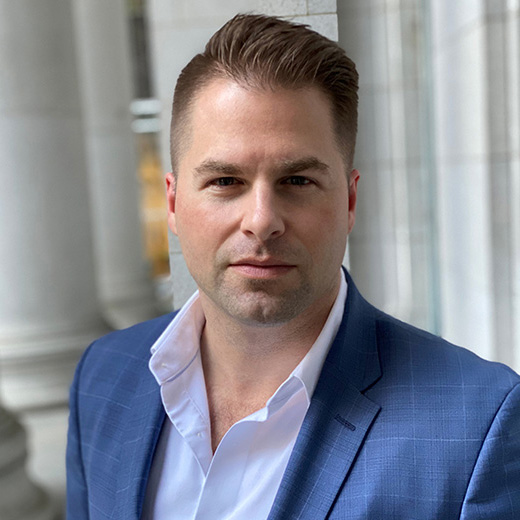
 Brady J. Frey
Clarification
Natural kinds has served as an ideal conceptualized form for the classification of scientific knowledge; a model where the intellectual grouping of elements in the "natural" world is revealed through the interpretation or observation of empirical evidence. Yet natural kinds is more than the prevalent and routine bracketing of objects in the world. Natural kinds identify the material and the pertinent–significant objects of division to be discovered writ large (once we know where and how to look for them). Attempts to identify synonyms through properties of a classified object or, more precariously, through possible instances that bear psychological, psychiatric, or social groupings are aspirational at best. The hope is that our identifications correspond with nature's real kinds, revealing the truth of the world and validating our scientific approach.
In reality, attempts at dividing and categorizing the world can be messy. Definitions of what makes a natural kind vary, including the possession of essential properties, the overlapping clusters of similarities, or the co-occurrence of properties that recognize individual history. Additionally, distinguishing relevance from irrelevance in an attempt to scaffold the coveted natural kind may be a product of valuation that champions one prominent element of an object as "more real." However, the entanglement of classification grows as "kinds of people, kinds of human action, and varieties of human behavior" become subjects for measured division. In the case of people (both self-aware and with agency), if valuations classify and describe themselves, the perception of these valuations can result in novel feedback to the listener. This methodological distinction is what Hacking calls human kinds (or in later publications, interactive kinds), distinguished by looping effects:
"People of these kinds can become aware that they are classified as such. They can make tacit or even explicit choices, and adapt or adopt ways of living so as to fit or get away from the very classification that may be applied to them. These very choices, adaptations, or adoptions have consequences for the very group, for the kind of people that is invoked. The result may be particularly strong interactions. What was known about people of a kind may become false because people of that kind have changed in virtue of what they believe about themselves."
The result is an inherent volatility to human kinds compared to natural kinds, where a person's reaction to classification leads to revising both the target classification and self-awareness of the label.
Hacking's observations are influenced by the peculiar shift in case studies related to psychiatric kinds apparent in modern attempts at classifying child abuse, multiple personality disorder, and schizophrenia. These classified people interacted with their classificatory schemes, resulting in individual change that, at times, rendered the original classification obsolete and subject to revision. In contrast (to much academic criticism), Hacking does not observe categorical instability in quarks, cystic fibrosis, mud, the common cold, and sunsets. Subsequently, Hacking makes two observations lampooned in contemporary discourse: only human kinds are interactive, and human kinds cannot be natural kinds.
It is the interactive claim that piques my interest–most specifically, speed in relation to the type of information and genuineness we see in the cycle of change. On the first, Cooper challenges Hacking's assertion that the speed with which human kinds change makes them distinct:
"The thought seems to be that the speed with which change occurs confounds our attempts to use human kinds in inductive inferences. Such a claim is questionable. Do human kinds really change more quickly than bacteria and viruses mutate?"
I agree; such a claim is questionable, but for different reasons. This is not a "hare-and-tortoise" account where the human kinds outrun scientific efforts based on speed alone. I argue that the transformative speed of dialogue using inexact information is a primary ingredient that distinguishes between human and natural kinds. Unlike the value-neutral distinctions of natural kinds, human kinds depend on sociocultural practices and rapid change within space and time constraints. They influence social interaction and (at times) politicization, and are the target of objective research, while simultaneously influencing that same research through new considerations of normative behavior. The results have directly impacted how people define themselves, opened doors for receptive care, and provided agency through awareness of medical diagnosis. In turn, those same participants re-cast the model of the very thing they have embraced.
Cooper believes the premise of rapid change is irrelevant: it is inadequate as a measure for metaphysical significance and unhelpful as a useful claimant that human kinds benefit from the natural kind argument. It is true that the comparison of change between free-living cells, viruses, and the speed of human thought cannot be practically compared. Nevertheless, the false analogy infers that existing methodology can keep pace with the changing developments of humans adopting and modifying the self-aware recognition of classificatory grouping. Indeed, bacteria (mutating multiple times per hour) and viruses (mutating multiple times multiple per day) move fast. Human recognition is something else entirely; conscious recognition lays claim to a low 40-60 bits per second, and unconsciousness processing commands 11,200,000 bits per second. Accuracy in awareness is situational, and the attributes we find valuable vary, but the skill of thought is rapid. Scientists start from firm ground when they measure the population growth of genetic mutation, whereas classifying the mass cultural movement of pan-ethnic labels move faster than their adaptation in an interconnected society. In a modern age, where social media is culture, speed of influence is a war waged from both physical isolation and public collaboration.
Hacking's claim is not about the quality or viability of change so much as it is that awareness at a rapid clip causes distinct (or genuine) change. I believe the transformative speed of dialogue using inexact information introduces scrutiny, promotes challenge, and distinguishes human kinds in a manner conducive to Hacking's assessment. While Hacking's time of information was before the age of the 24-hour news cycle, Cooper's time was before smartphones and social media. In the past decade, information has been less of a slow-burning candle and more of a forest fire fueled by powerful technological and social forces driving views. During the COVID-19 Pandemic, self-classification took a unique turn, where patients first defined "Long Covid" through social media, later adopted by scientists, and further refined as an unstable term through patients' experience of epistemic injustice. What it means for a human to recognize and change their associated identity (or the very classification) is rapidly changing shape (from intake to acceptance) with a variety of sources that 1991 and 2004 could only imagine.
It may still be that Cooper is correct in that speed does only influence (rather than determine) genuine change. It may also be valid that genuine changes are akin to biological changes–facilitated by inductive inferences to examine the past and predict future behavior. I may also argue that the viable difference between relational and genuine change rests on a semantic distinction. However, the speed of inexact information through dialogue influences self-defining classifications for people where instantaneous information leads to challenging everything from established social constructs to the panic found in casual loops. Rapidity emboldens the cycle of change Hacking determined as a primary uniqueness in human kinds, where looping is distinct as an element of consciousness through intentional agency. At minimum, human kinds are distinct from natural kinds because the same classification item talks back in real-time.